To lose weight, the USDA’s Dietary Guidelines recommend that individuals reduce the number of calories they get from beverages and foods and increase the number of calories used up from physical activity.
This weight management method is based upon the energy balance model approach which declares that weight gain is a result of consuming more energy than expended. Nowadays, bombarded by highly palatable, intensively promoted, and cheaply processed foods, it’s easy for individuals to consume more calories than needed, an imbalance that’s even more exacerbated by modern-day sedentary lifestyles.
According to this approach, overeating combined with too little physical activity is driving the obesity epidemic. However, despite many years of public health messaging urging individuals to consume less food and exercise more, obesity rates, as well as diseases related to obesity, have steadily increased.
Researchers point out basic weaknesses in the energy balance model, reasoning that an alternate model called the carbohydrate-insulin model more effectively explains weight gain and obesity. The carbohydrate-insulin model could also be the answer to long-lasting and more effective strategies for weight management.1✅ JOURNAL REFERENCE
DOI: 10.1093/ajcn/nqab270
According to the lead researcher, the energy balance model doesn’t help in understanding weight gain’s biological causes. As an example, adolescents may increase their daily intake of food by 1,000 calories during a spurt of growth. Does overeating result in the spurt of growth or does the spurt of growth result in the adolescent getting hungry and overeating?
The carbohydrate-insulin model claims that overeating isn’t the primary cause of obesity, as opposed to the energy balance model. According to the carbohydrate-insulin model, the current obesity epidemic is mainly due to modern dietary patterns characterized by eating too many high glycemic foods, particularly rapidly digestible and processed carbohydrates. These food types lead to hormonal responses that essentially change the metabolism, driving storage of fat, obesity, and weight gain.
When consuming highly processed carbohydrates, insulin secretion increases, and glucagon secretion is suppressed. This subsequently alerts fat cells to store more calories, leaving fewer available calories for fueling muscles and other metabolically active tissues. The brain then perceives that there is inadequate energy for the body, which subsequently causes feelings of hunger. Metabolism could also slow down the body’s attempt to conserve fuel. As a result, we often stay hungry, even as we carry on gaining excess fat.
Understanding the obesity epidemic also requires looking at how hormones and metabolism are affected by the foods being consumed, not just how much is being consumed. The energy balance model overlooks this crucial piece of the puzzle with its assertion that all calories are equal.
Adopting the carbohydrate-insulin model instead of the energy-balance model has significant implications for treating obesity and managing weight. Instead of urging individuals to eat less, a strategy that usually fails in the long run, another option would be focusing more on the food eaten with the carbohydrate-insulin model. Reducing intake of rapidly digestible carbohydrates that started bombarding the food supply in the low-fat diet years reduces the underlying need for storing body fat, and individuals may subsequently lose weight with more ease and less hunger.
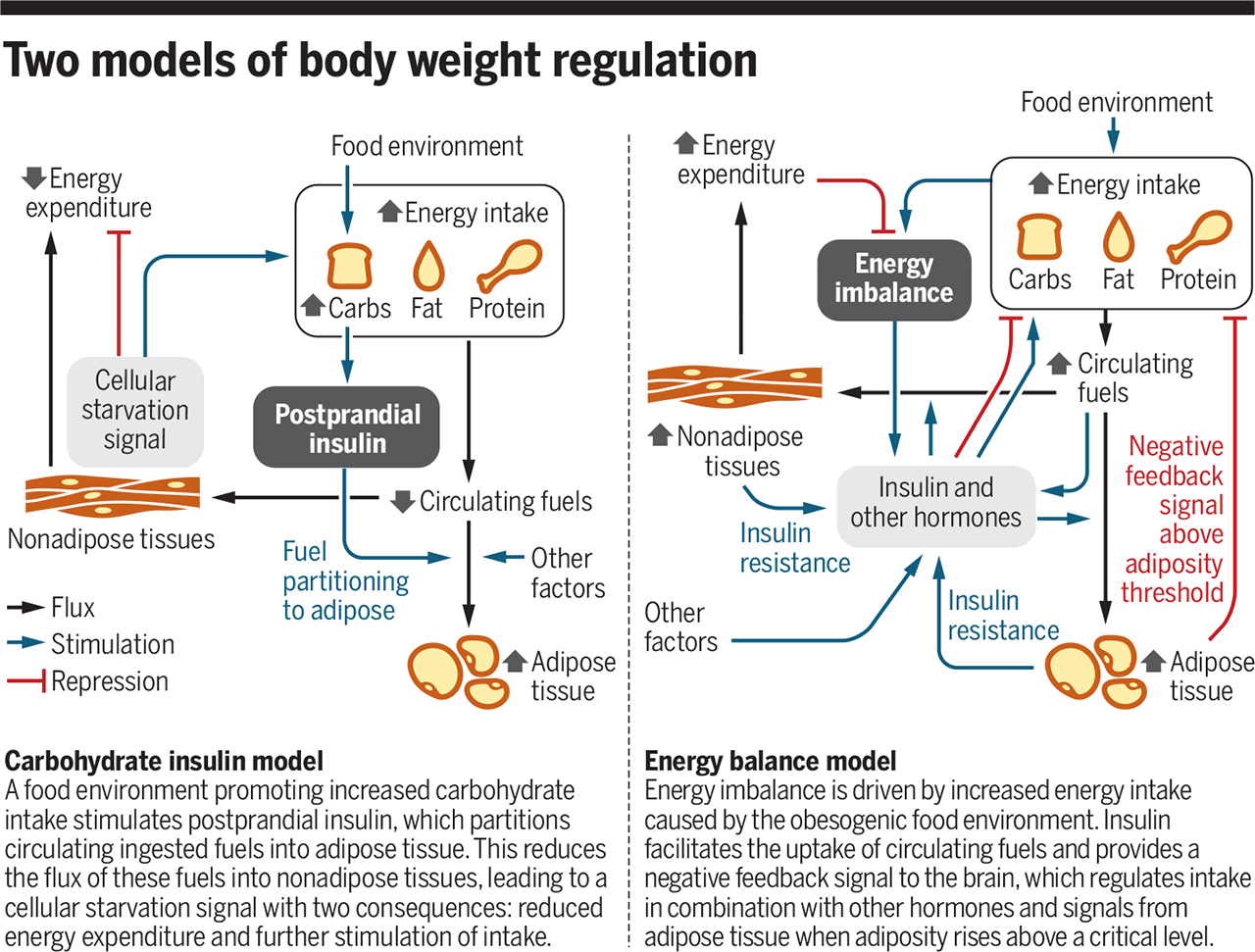
Image Source – science