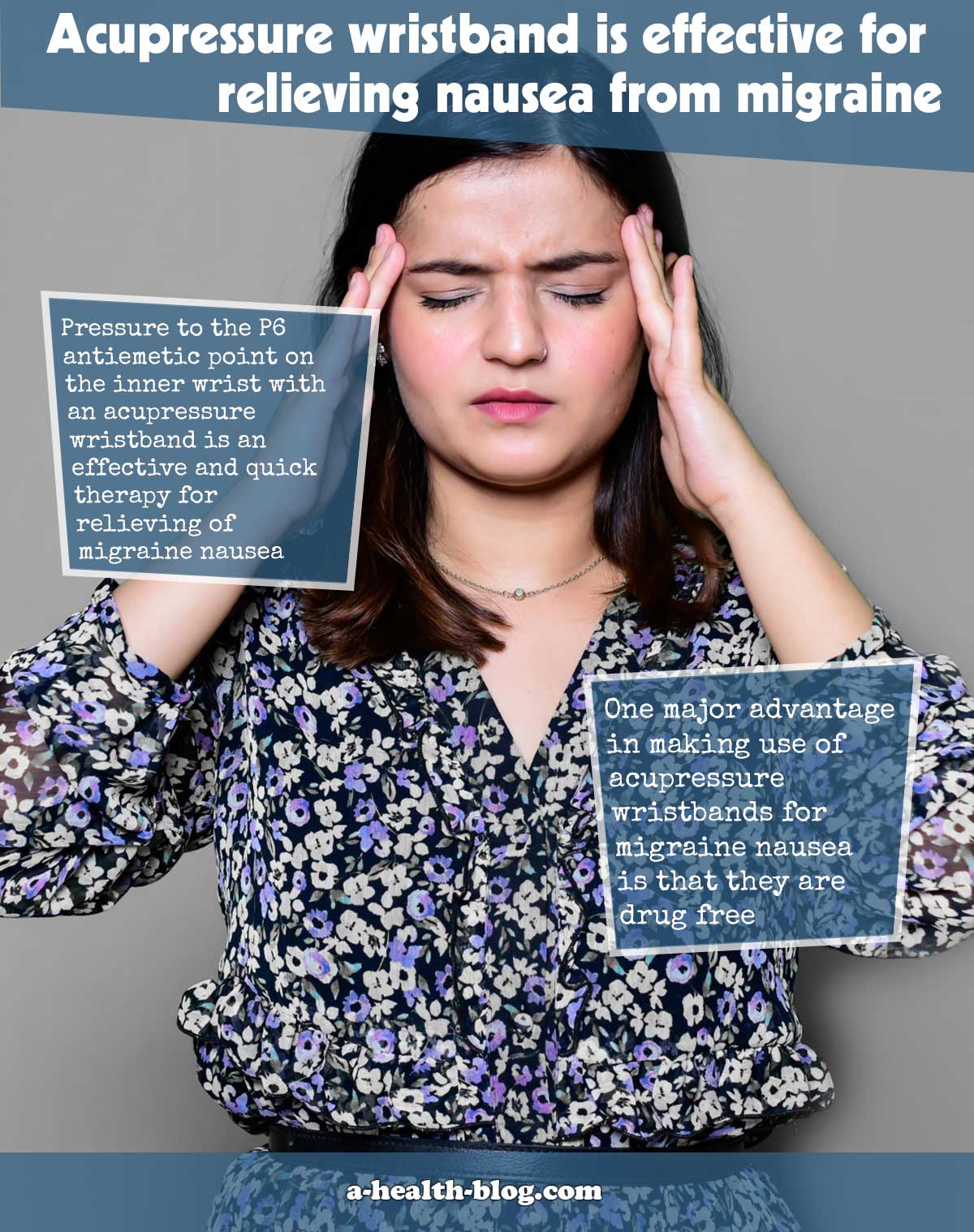
One of the most unbearable migraine symptoms is nausea, and impacts 80% of migraine sufferers in the US. A headache physician showed in a study that pressure with an acupressure wristband to the P6 antiemetic point located on the inside of the wrist is an effective and also quick remedy for relief of migraine nausea.[1]
According to the American Migraine Foundation, migraine impacts 36 million Americans, and can be a debilitating neurological condition, and is regarded by the WHO as the 19th main reason for both females and males for all years lived having disability.
The acupressure study involved 41 individuals who suffered an average of 33.1 days of migraine throughout the past 3 months having an average intensity of 6.2 out of 10 for nausea.
Individuals received acupressure wristbands rather than antiemetic drugs at the time of a migraine attack and 83% of individuals experienced reduction of migraine nausea.
Reported migraine nausea following treatment was scored a 2.9 out of 10 and after an average of 28 minutes relief was reported. Almost all participants said they would make use of acupressure wristbands again for migraine nausea.
A major advantage in making use of acupressure wristbands for migraine nausea is that they are drug free, so they don’t have any interaction risks with migraine medications or the unwanted side effects normally found with antiemetics, like tiredness or dizziness.